~ this page is evolving ~
Herewith a small selection of working examples, indicative snapshots if you prefer.
Each portrays an approach to real systems:
working with existing constraints & uneven skill matches,
and with a core of understanding that systems live in time and among people.
The emphasis is on how decisions are made, rather than on the specific technologies used,
as details, tools, and domains vary across work projects.
Designing repeatable workflows at the edge of software capability
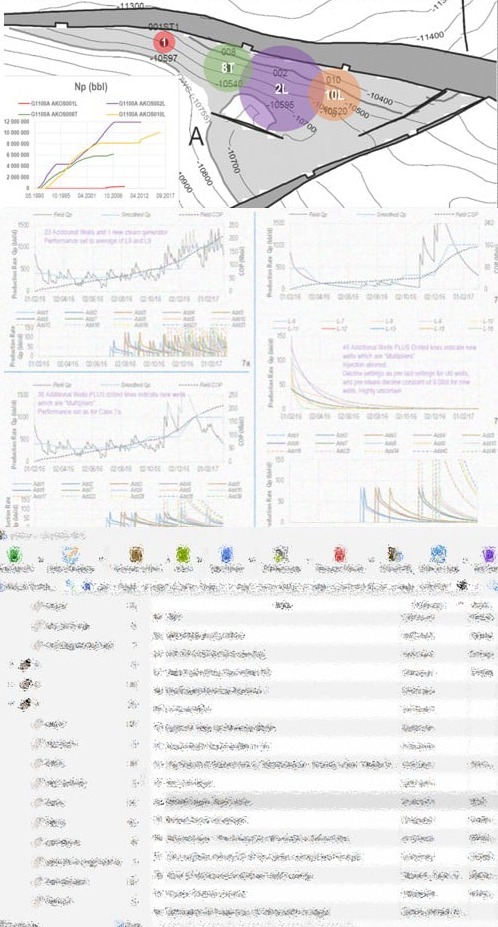
Charting. This can be effortful, especially for dense data. And yet, it’s super-important. Templates help, once one has set one up that covers 80% of necessities. Can ai help? Sure, with focused, precision-prompting. But often, a manual setup supersedes other ways.
Bubble-mapping… Working with all kinds of software, one will experience glitches. Combining bubble charts on a scaled map, for regular forecasting, proved to be hazardous for health! One could try to avoid this by switching tools — but working at the edge of capability increases glitch probability regardless. For complex, systematic, repeatable workflows, the devil's in the details.
Details were exactly what was important for one of umpteen personal projects over years – to build separate digital libraries for electronic books, documents and information, across engineering, literature and general non-fiction. All were tagged according to my practical world-view and interests. All were super-accessible because I had made the effort to try to understand what was important to me. Now, a decade later, I can pull out a long-archived library, do a quick tag check, and have personally-curated information at hand in a flash.
Working from ground reality rather than abstract models
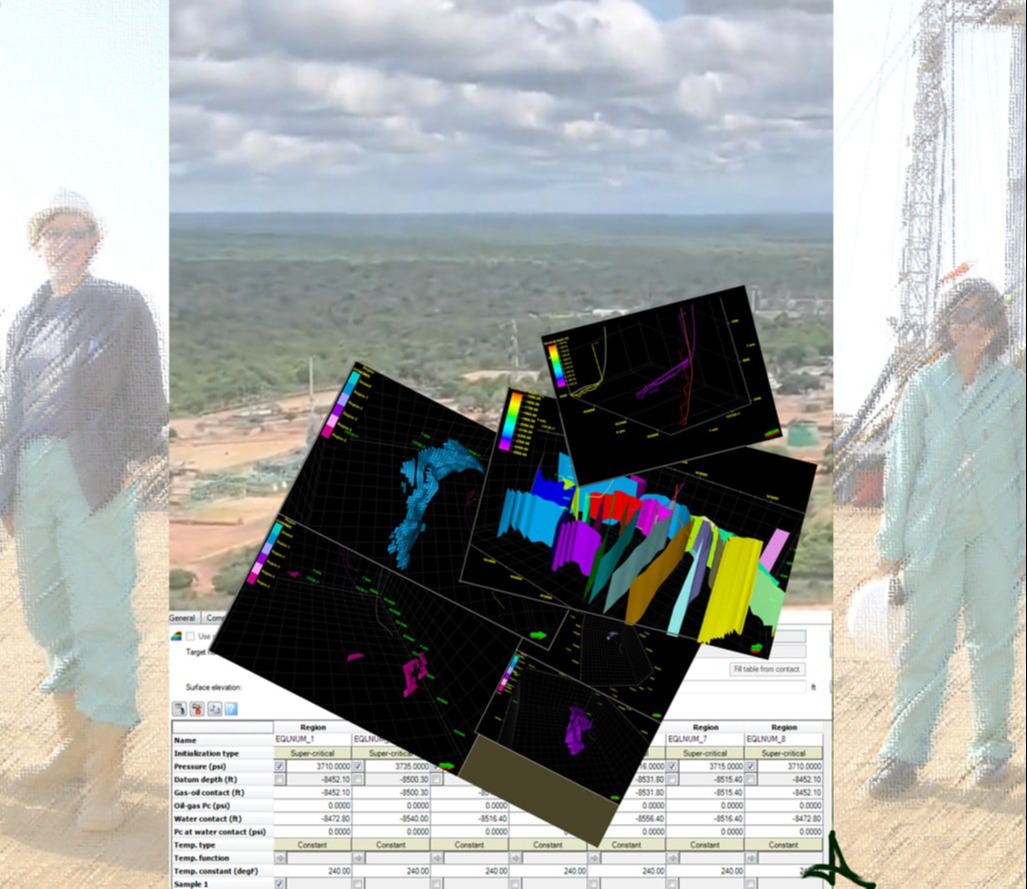
Sometimes GTD (getting things done), means getting to ground level, in this case a drilling camp. Learning in real time, observing experts in action, and letting reality drive the theory one’s modelling on computer teaches, amongst many lessons, that abstract ideas can't substitute for reality.
When working with people, we get an insider view. We pick up the vocabulary of the teams, and we overlap the edges where our work areas meet. This is not about niceties. It's about understanding details, respecting people and methods, and it's the gateway to building with rather than for, or over people. And... your world view deepens from television-sized to globe-sized.
(Contact me for LinkedIn CV)
Stewardship of systems across changing roles and skill levels
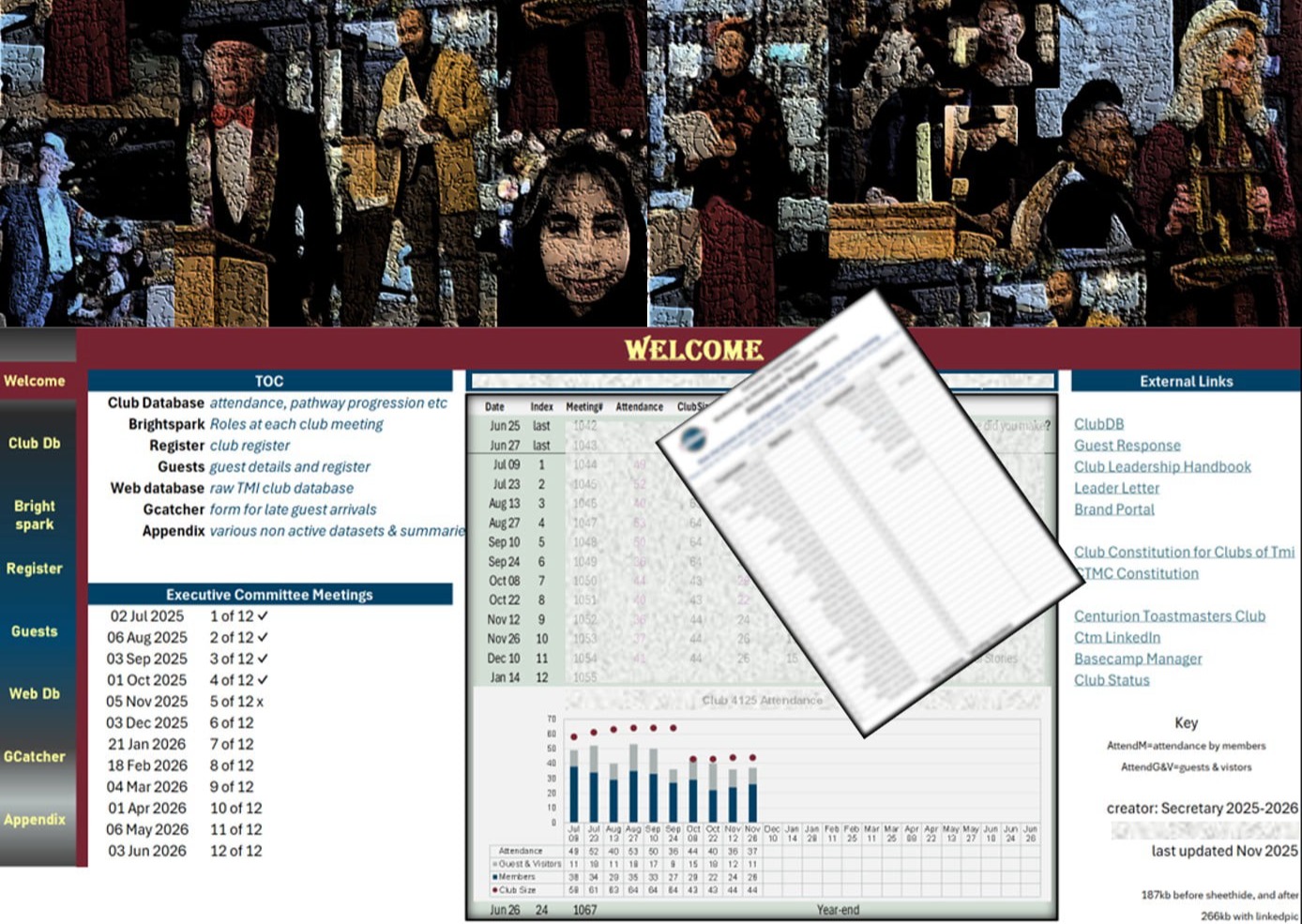
As a toastmaster club secretary, the year provided opportunity for layered exploration in a tiny, almost experimental way.
Here are some questions I found myself exploring.
How can I stay true to my perceived vision - that leadership on the executive committee means serving the club under the direction of TM International, whilst integrating with my fellow exco members?
How can I generate club minutes in a way that brings meetings alive if a member reads it years later, whilst also getting the factual information? Yes, minutes don't have to be a lifeless record. Instead, they can be a placeholder for energy, memories, learnings...
How can I manage or design the club's database to extract information useful for planning meetings, assisting educational pathways, engaging member interest, and maintain records?
How can I hand over the skeleton of what I've built, so that the next secretary can adapt with minimal effort, without knowing the skillset of this new person? How can I offer support to the new secretary, depending on their skills and what attracts them? For example, can they take care of macros in spreadsheeting? Can they handle security updates in digital systems? Are they willing to deal with automation tools that may change in the near future? Will they actually read a manual if I set one up, to cover future difficulties?
How do I introduce the idea of systems rather than mini tasks that are isolated in time and seem to be role-centered? How can I show that systems always exist, even if they're undesigned and haphazard, and it's up to whoever is using it or in charge, to attempt to see these invisible frameworks? How do I tend an existing system, so that it give space for energy and creativity rather than limitation? How do I convince others that often, the pain of thinking system-wise has huge benefits, and lovely trajectories?
And this is separate from the question of joining Toastmasters in the first place - to learn to use my voice to complete the cycle of creation efforts.. speak of what I wonder, and explore, and build.
HTML Creator